
Gál Concerto for Piano & Orchestra
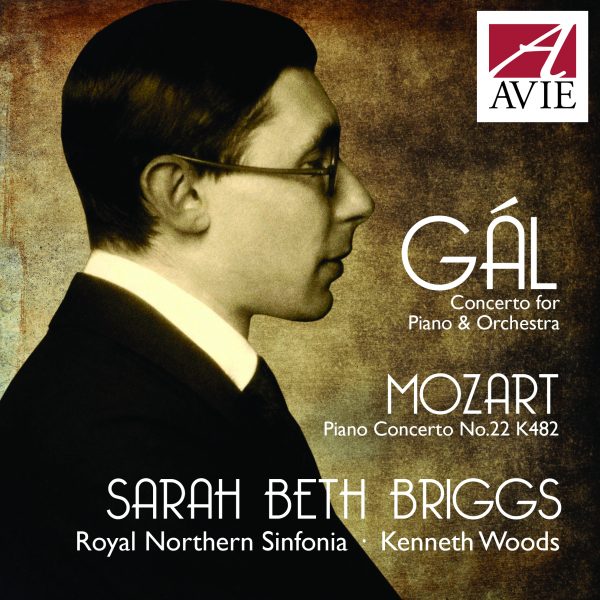
Mozart: Piano Concerto No.22 K482
Sarah Beth-Briggs (piano), Royal Northern Sinfonia & Kenneth Woods (conductor)
Avie Records 2016
AV2358
Where to buy or listen
Hans Gál: Concerto for Piano & Orchestra
Hans Gál, Wolfgang Amadeus Mozart; Sarah Beth Briggs, Royal Northern Sinfonia; Kenneth Woods
About this release
This disc pairs the world‑premiere recording of Hans Gál’s 1948 Concerto for Piano and Orchestra Op. 57 with Wolfgang Amadeus Mozart’s Piano Concerto No. 22 in E‑flat, K 482. Written after the turmoil of the Second World War, Gál’s concerto is at once large‑scaled and lyrical: three movements that open with a sunny Allegro, unfold into a rapt Adagio and finish with a playful Allegretto vivace. His finely wrought solo writing abounds with sweeping phrases and virtuosic pyrotechnics, yet always maintains the composer’s hallmark clarity and balance. English pianist Sarah Beth Briggs brings warmth and poise to the premiere, joined by the Royal Northern Sinfonia under conductor Kenneth Woods. The coupling with Mozart’s richly orchestrated E‑flat major concerto highlights how Gál’s Viennese roots and classical elegance meet twentieth‑century lyricism.
Where to buy or listen
What critics said
“Briggs gives a wonderfully balanced reading of music that seems familiar – in its classical poise and charm – and strange … Kenneth Woods and the Royal Northern Sinfonia accompany superbly; with crystal‑clear sound, this is a most enjoyable concerto disc.”
– Guy Rickards, Gramophone. This line appears in the Gramophone review quoted on the Avie Records product page (avie-records.com).
MusicWeb International reviewer Bob Stevenson noted that Sarah Beth Briggs and the Royal Northern Sinfonia “do the composer proud”, praising the engaging performance and the lifelike soundstage. His full review can be read at MusicWeb International.
Further context
Gál’s piano concerto belongs to a sequence of concerted works composed after his emigration from Austria. Unlike many of his contemporaries, he shunned musical modernism, crafting a personal idiom that blends classical forms, radiant melody and subtle counterpoint. The coupling with Mozart’s K 482 underscores how his language, though written in the shadow of war and exile, looks back to the clarity of 18th‑century Vienna while projecting a resilient optimism.
Listen to excerpts
Op.57 · Piano Concerto · 3
Gál Concerto for Piano & Orchestra
Avie · AV2358
Sarah Beth Briggs (piano); Royal Northern Sinfonia; Kenneth Woods
Recording details & buying options →









![Schott Harmonie Serie [Wind Orchestra Series] — Clarino CD Vol. 9](/storage/recordingcovers/schott-harmonie-t4282.jpg)