Remembering Vienna; Hans Gál: works for treble recorder & piano
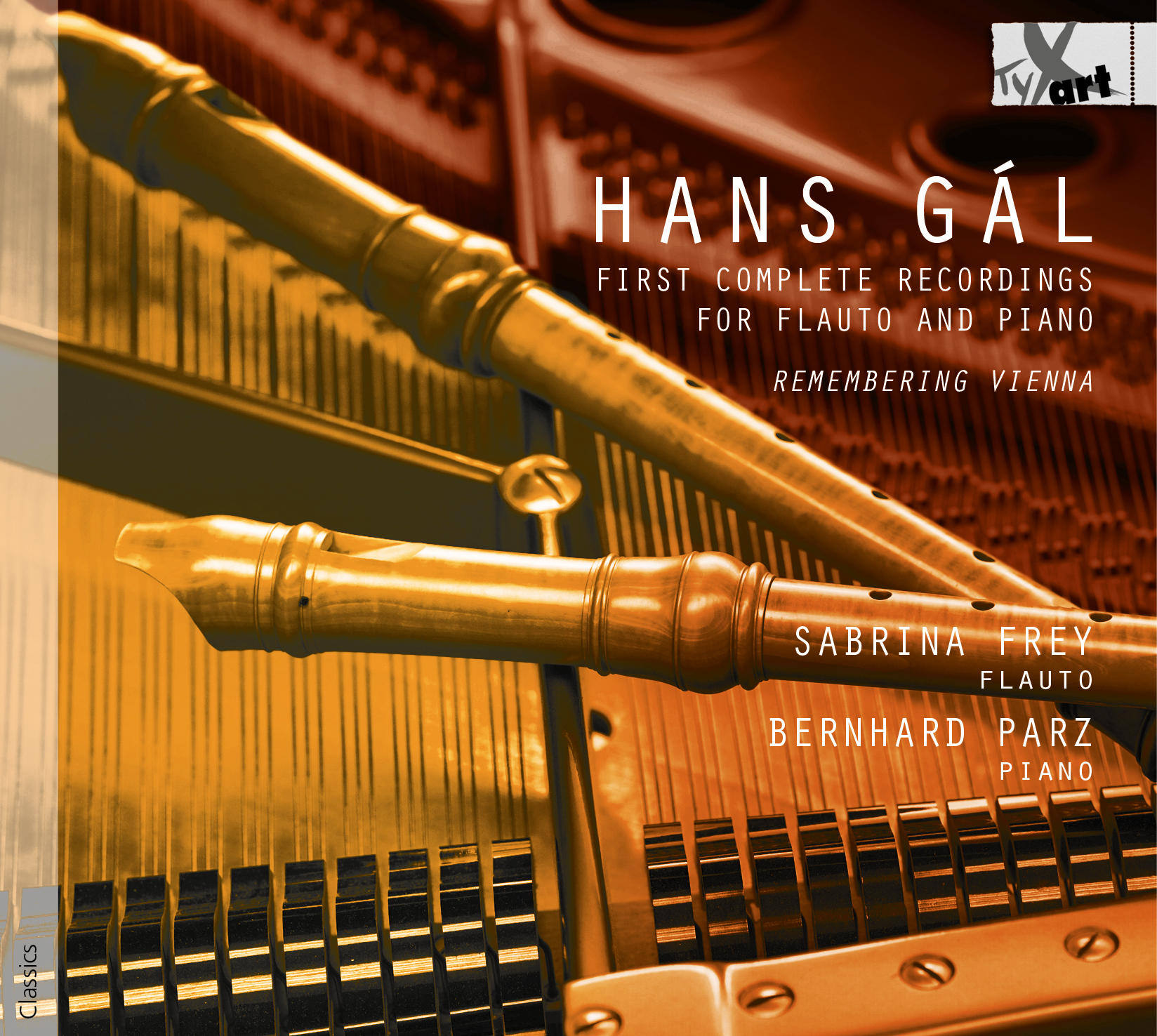
Hans Gál: Erste Gesamtaufnahme für Blocklöte und Klavier
(Hans Gál: First complete recordings for treble recorder and piano)
Concertino for treble recorder and piano op.82 (1961)
Recorder Sonatina for treble recorder solo op.110B (1983)
Three Small Pieces for Piano op.64 (1933)
Four Bagatelles for treble recorder solo op.110A (1983)
Three Intermezzi for treble recorder or flute and harpsichord or piano Op.103 (1974)
Moment Musical for treble recorder solo (1958)
Sabine Frey (treble recorder) & Bernard Parz (piano)
Where to buy or listen
Remembering Vienna: Hans Gál works for treble recorder & piano
Hans Gál • Sabine Frey (treble recorder); Bernard Parz (piano)
About this release
This recital highlights Hans Gál’s music for treble recorder and piano, much of it written during his Edinburgh years but steeped in Viennese nostalgia. The centrepiece is the 1955 Concertino Op. 82 for recorder and strings, here performed in its piano reduction, a sparkling tribute to baroque concerto form imbued with Gál’s characteristic warmth. The disc also includes the recorder sonatina Op. 110b and numerous miniatures for piano solo—bagatelles, intermezzi and moments musicaux—evoking Viennese salons. Recorder player Sabine Frey and pianist Bernard Parz capture the music’s charm and grace.
Where to buy or listen
- Tyxart product page (CD)
What critics said
The international press review on Tyxart’s site gathers praise for this recital. Pizzicato.lu remarks on the demanding repertoire and the performers’ technically superior, interpretative playing, while The Art Music Lounge calls it “a very delightful CD” and praises the wonderful performances【868760634395732†L72-L88】. Read the press quotes at Tyxart.
Further context
Gál wrote relatively little for the recorder, but these pieces reveal his delight in historical styles and his ability to adapt them into his own melodic language. The album’s title reflects both the music’s nostalgic tone and the composer’s lifelong affection for Vienna, which he continued to evoke long after settling in Britain. Frey and Parz’s performances make an engaging case for this corner of his output.